
Yes. Phoenix tap water is safe to drink. The City of Phoenix's 2025 Water Quality Report says the water delivered to about 1.7 million residents met or surpassed all federal and state drinking water standards. What "safe" doesn't cover is taste, minerals, and a few trace substances some people choose to reduce further, which is why so many Phoenix homes still filter their drinking water.
Here's what the report actually measured, in plain English, and who might still want a filter. (If you're on a different utility, such as Scottsdale, Mesa, Chandler, or EPCOR, your provider publishes its own annual report with similar data.)
Where Phoenix Water Comes From
About 97 to 99 percent of Phoenix's water is surface water that started as snowpack, from the Salt, Verde, and Colorado rivers. It arrives through SRP canals and the CAP aqueduct and is treated at five plants. The remaining 1 to 3 percent comes from about 20 city wells. Treatment includes screening, coagulation and settling, filtration, and disinfection with chlorine. Phoenix also adds a small amount of fluoride.
What's in Phoenix Tap Water: The 2025 Numbers
| Substance | Phoenix 2025 result | Federal limit | What it means |
|---|---|---|---|
| Chlorine (disinfectant) | Under 0.24–1.9 ppm (0.84 average) | 4 ppm | Keeps water safe in the pipes; the pool-like taste |
| Arsenic | Not detected–8.5 ppb (7 highest annual average) | 10 ppb | Naturally occurring; meets the standard at low levels |
| Nitrate | Not detected–4.5 ppm | 10 ppm | Below the limit |
| Fluoride | 0.3–1.1 ppm | 4 ppm | Added in small amounts for dental health |
| Total trihalomethanes | 4–68 ppb (49 highest locational average) | 80 ppb | Disinfection byproducts; below the limit |
| Uranium | Not detected–4.6 ppb | 30 ppb | Naturally occurring; well below the limit |
| Total dissolved solids | 464–716 ppm | 500 ppm (aesthetic guideline) | Minerals; affects taste, not safety |
| Hardness | 10–17.6 GPG | No standard | Very hard; causes scale, not a health issue |
Source: City of Phoenix 2025 Water Quality Report. ppm = parts per million (mg/L); ppb = parts per billion.
The Items Worth Understanding
Arsenic
Arsenic occurs naturally in Arizona's geology. Phoenix's water meets the EPA standard, and the city's report notes that it does contain low levels of arsenic, and that EPA continues to research the health effects of low-level exposure. If you want it lower, many reverse osmosis systems are certified to reduce arsenic. Check the system's NSF/ANSI 58 certification for an arsenic claim.
Lead
Lead in tap water comes mostly from plumbing, not the treatment plant: older service lines, lead solder, and brass fixtures. In Phoenix's most recent testing (2024), 90 percent of homes sampled were at or below 3 ppb, and 2 of 56 homes were above the 15 ppb action level. If your home was built before the late 1980s, the city recommends running the tap before using water for drinking or cooking, using only cold water for cooking and baby formula, and considering a filter certified to reduce lead. You can check the city's service line inventory at phoenix.gov/pipes.
PFAS ("forever chemicals")
During EPA's latest round of unregulated contaminant monitoring, Phoenix tested for 29 PFAS compounds. Two, PFBA and PFBS, were detected at a few parts per trillion, and the report lists them under unregulated contaminants. Reverse osmosis is one of the most effective home treatments for PFAS if you want to reduce them further.
Lithium
The same monitoring found naturally occurring lithium at 22 to 160 ppb (70 ppb average). Lithium is currently unregulated, and Phoenix reported it as part of EPA's monitoring program.
One reporting note
The 2025 report includes a required notice: in May 2025 the city counted six repeat samples toward its 360 routine monthly bacteria samples, ending with 359 routine samples instead of 360. The city says the incident posed no health risk, no E. coli was found, and it now schedules extra samples each month.
If It's Safe, Why Does It Taste Like That?
Three things drive the taste, and none of them are safety issues:
- Chlorine. Phoenix disinfects its water with chlorine so it stays safe all the way to your tap. Some people notice a pool-like taste or smell.
- Minerals. At 464 to 716 ppm of total dissolved solids, Phoenix water often runs above the EPA's 500 ppm aesthetic guideline. That's the heavy, slightly salty taste.
- Seasonal algae. In late summer and fall, algae in the canals can cause a musty, earthy taste. Here's why Phoenix tap water tastes musty in the fall.
Who Might Still Want a Filter
The City of Phoenix says filters are typically not necessary unless your physician advises one or you simply want one. People in Phoenix most often filter because:
- They don't like the taste of chlorine or minerals, or they're tired of buying bottled water
- They live in an older home and want extra protection from lead in household plumbing
- They want to reduce trace substances like arsenic or PFAS further than the standards require
- Someone in the home is immunocompromised (the city recommends these residents ask their health care provider about drinking water)
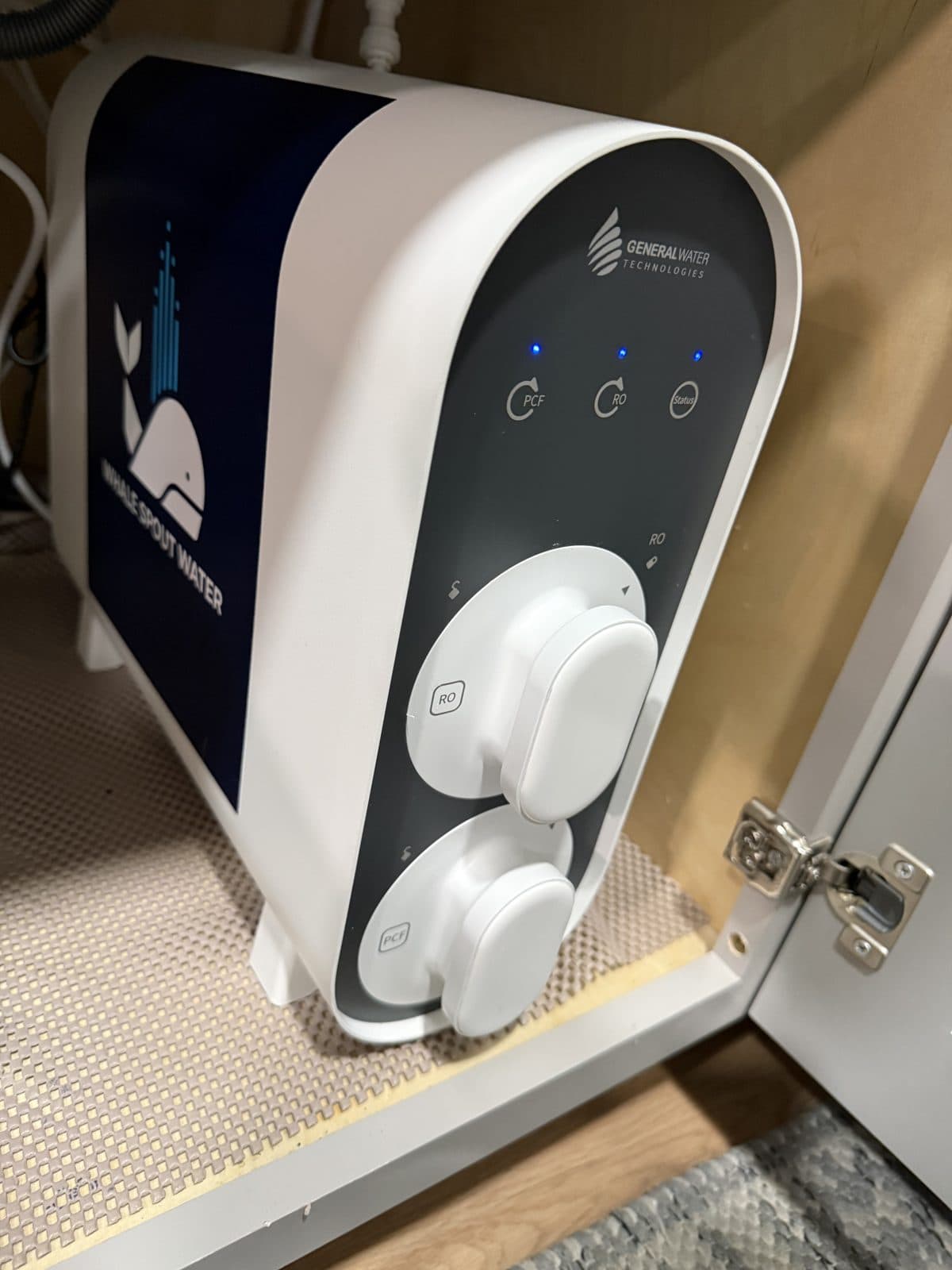
A pitcher or fridge filter certified to NSF/ANSI 42 handles chlorine taste. An under-sink reverse osmosis system certified to NSF/ANSI 58 goes further, reducing dissolved minerals and many trace contaminants. Whatever you use, change the filters on schedule. The city's report itself warns that a poorly maintained home treatment system can make water worse.
A water softener is a different tool. It removes hardness to prevent scale, but it isn't a drinking water filter. See how hard Phoenix tap water is for that side of the story.
The Bottom Line
Phoenix tap water is safe to drink and meets every federal and state standard. It's also very hard, high in dissolved minerals, chlorinated, and seasonally musty, which is why it doesn't always taste like it. If you want better-tasting water with lower minerals and trace contaminants, an under-sink RO system is the most complete fix.
Whale Spout Water installs 5-stage under-sink RO systems with alkaline remineralization for $899 fully installed. Book a free 15-minute consult and we'll tell you honestly whether you need one.