
The white crusty stuff on your Arizona shower head is limescale: hardened calcium and magnesium left behind when Phoenix's very hard water (up to 25 GPG in parts of the valley) evaporates. You noticed it a few months after moving into your Phoenix-area home. A white, chalky crust forming around the base of the shower head. Then around the faucet handles. Then in the corners of the glass shower door. Now it's on the tile, on the sink, on the outside of the dishwasher door where water splashes. No matter how much you scrub, it comes back within days.
It's not mold. It's not soap residue. It's not a sign that your home is dirty. It's limescale, and in Phoenix, Scottsdale, Chandler, Gilbert, Mesa, Glendale, and virtually every city across the Phoenix metro, it's one of the most universal home problems there is.
Here's what it actually is, where it shows up, what it's costing you, and why it's worse in Arizona than almost anywhere else in the country.
What Is Limescale? A Simple Definition
Limescale (also called mineral scale, calcium scale, or hard water deposits) is the solid residue left behind when hard water evaporates or is heated. Phoenix tap water contains high concentrations of dissolved calcium and magnesium ions, picked up as the water travels through limestone, dolomite, and other mineral-bearing rock formations in Arizona and along the Colorado River corridor.
When that water sits on a surface and evaporates, or when it's heated (in a water heater, dishwasher, or kettle), those dissolved minerals don't evaporate with it. They stay behind and bond to whatever surface they were touching, forming calcium carbonate, the same compound that makes up limestone and chalk. That's the white crusty buildup on your shower head.
The chemistry is simple: dissolved calcium + heat or evaporation = solid calcium carbonate stuck to your fixtures, appliances, and pipes.
Why Is It So Bad in Arizona?
Arizona's hard water problem isn't just noticeable. It's measurable and extreme. Water hardness is measured in grains per gallon (GPG), where anything above 7 GPG is considered hard and anything above 10.5 GPG is classified as "very hard."
Phoenix-area utilities report about 5 to 25 GPG depending on the city and the blend of water sources, and most of the metro is above the "very hard" line. Some West Valley communities rely heavily on groundwater, which tends to carry more minerals than surface water.
Specific readings from Phoenix-area cities:
- Phoenix: 10–17.6 GPG (City of Phoenix 2025 Water Quality Report)
- Scottsdale: 16–25 GPG, depending on the part of the city
- Chandler: 5–20 GPG, averaging 16.5 citywide
- Mesa: 12–22 GPG, depending on the source serving your area
- Peoria: 13–17 GPG from its treatment plants (its groundwater wells run softer)
- Tempe: 11–17 GPG, averaging about 13.5
- Gilbert: 8–10 GPG average
- Fountain Hills: about 18 GPG (EPCOR)
- Queen Creek: 6–17 GPG
- Sun City: 7–11 GPG (EPCOR)
Add Arizona's climate into the equation (high heat, low humidity, and abundant sunshine) and water evaporates faster here than in most U.S. cities. Faster evaporation means scale deposits build up faster. The white crust you're fighting in Phoenix forms in weeks in conditions where a homeowner in Portland might not see it for months.
Every Place Scale Buildup Appears in an Arizona Home
Limescale doesn't stay in one place. It follows your water wherever it goes, and in a home with very hard water running through it all day, every day, that's everywhere.
Shower Heads
The most visible spot. Shower head nozzle holes clog with calcium deposits over months of use. You'll notice reduced water pressure long before you see the full extent of the buildup inside the nozzles. A new shower head in a Phoenix home can show visible external buildup within 3–6 months and experience measurable pressure loss within a year. In many Phoenix homes, "weak shower pressure" is actually a scale problem, not a water pressure problem.
Faucet Aerators
Every kitchen and bathroom faucet has a small screen at the tip (the aerator) that mixes air into the water stream. This screen is a perfect scale trap. Calcium deposits accumulate on the mesh, progressively restricting flow. Most Phoenix homeowners remove their faucet aerators once a year for cleaning, or more often if their water hardness is on the higher end.
Glass Shower Enclosures and Doors
Hard water spots on glass are one of the most frustrating cosmetic effects of scale in Phoenix. When water droplets dry on glass, they leave calcium rings behind. Over time, these etch into the glass surface, creating permanent cloudiness that no amount of Windex removes. In severe cases, usually after 2–3 years of hard water exposure with no treatment, the only fix is glass replacement or professional polishing.
Tiles and Grout
The white haze on your bathroom tile isn't grout degrading or soap scum. It's calcium depositing across the tile surface every time water splashes and dries. Grout is particularly vulnerable because it's porous. Minerals penetrate the grout and stain it from within, creating discoloration that cleaning can't reverse. Over years, scale accumulation in grout also weakens it, accelerating cracking and requiring regrouting sooner than expected.
Dishwashers
Inside a dishwasher, scale accumulates on the heating element, spray arm holes, and interior walls. Clogged spray arm holes reduce cleaning effectiveness: your dishes come out spotted and filmy not because the dishwasher is broken, but because the spray pattern is restricted by mineral deposits. The heating element coated in scale uses significantly more electricity to reach temperature. Most dishwasher manufacturers in hard water areas recommend periodic descaling treatments.
Coffee Makers and Electric Kettles
The heating elements in coffee makers and kettles are particularly vulnerable to scale because heating is exactly the condition that drives calcium out of solution and onto surfaces. In Phoenix, a coffee maker used daily will develop visible scale on the heating element and internal water lines within 2–3 months. This affects coffee flavor, extends brew time, and ultimately burns out heating elements ahead of their expected lifespan.
Refrigerator Ice Makers and Water Dispensers
Refrigerator water and ice lines are low-flow, which means water sits in them longer and has more time to deposit minerals. Ice cubes from a hard water home often look cloudy (caused by dissolved minerals trapped in the ice as it freezes) and leave white residue in ice trays and dispensers. The water lines themselves gradually narrow from scale accumulation, eventually restricting flow to the ice maker.
Washing Machines
Hard water interferes with laundry detergent the same way it interferes with every other soap: calcium ions bond with detergent molecules before they can clean your clothes, reducing cleaning effectiveness and leaving mineral residue in fabric fibers. Inside the machine, scale accumulates on water inlet valves, heating elements (in machines with heated wash cycles), and drum surfaces. Laundry from hard water homes often feels stiff and looks dull even when freshly washed.
Water Heaters
This is where scale causes the most expensive damage. A tank water heater's heating element sits at the bottom of the tank, exactly where calcium sediment settles and accumulates. Scale on a heating element forces it to work harder to transfer heat through the mineral layer, consuming more energy and burning the element out faster. A water heater that should last 12–15 years in a soft water home typically lasts 7–9 years in a Phoenix home with no treatment. That's thousands of dollars in early replacement and excess energy costs that most homeowners never connect to their water.
Tankless water heaters are even more vulnerable. Their heat exchangers use narrow passages designed for maximum heat transfer efficiency, and those narrow passages are exactly the geometry that scale fills most aggressively. Most tankless heater manufacturers, including Rinnai, Navien, and Noritz, explicitly require a water softener or descaler for warranty coverage in areas with water hardness above 11 GPG. Most Phoenix metro areas are above that threshold.
Pipes and Plumbing
Scale buildup inside pipes is the slow-burn problem that homeowners rarely think about until it's too late. Mineral deposits on pipe walls gradually reduce the interior diameter, reducing water pressure throughout the home. This process accelerates in hot water lines. In homes with older copper plumbing that has never had water treatment, it's common to find significant flow restrictions that require pipe replacement, not because the pipes corroded, but because scale filled them.
Find your city's number on our Phoenix water quality page, or read how hard Phoenix tap water really is.
The Real Cost of Scale Buildup in Phoenix
The white crust on your shower head is annoying. The financial impact of what's happening inside your walls, behind your appliances, and inside your water heater is significant.
Conservative estimates for a Phoenix household without water treatment, measured over 10 years:
- Early water heater replacement: $1,200–$1,800 (replaced at year 8 instead of year 15)
- Excess water heater energy costs: $800–$1,500 (30–40% efficiency loss over years 4–8)
- Appliance damage (dishwasher, washing machine): $400–$800 in early servicing or replacement
- Extra soap and detergent: $300–$600 (hard water requires 50–75% more product to achieve the same cleaning results)
- Fixture and glass replacement or professional cleaning: $200–$600
Total 10-year cost of untreated hard water in a typical Phoenix metro home: $3,000–$5,000+. Most of it invisible, gradual, and misattributed to normal wear and tear.
How to Stop Scale Buildup in an Arizona Home
There are two effective approaches to preventing limescale throughout your home:
Salt-Based Water Softener
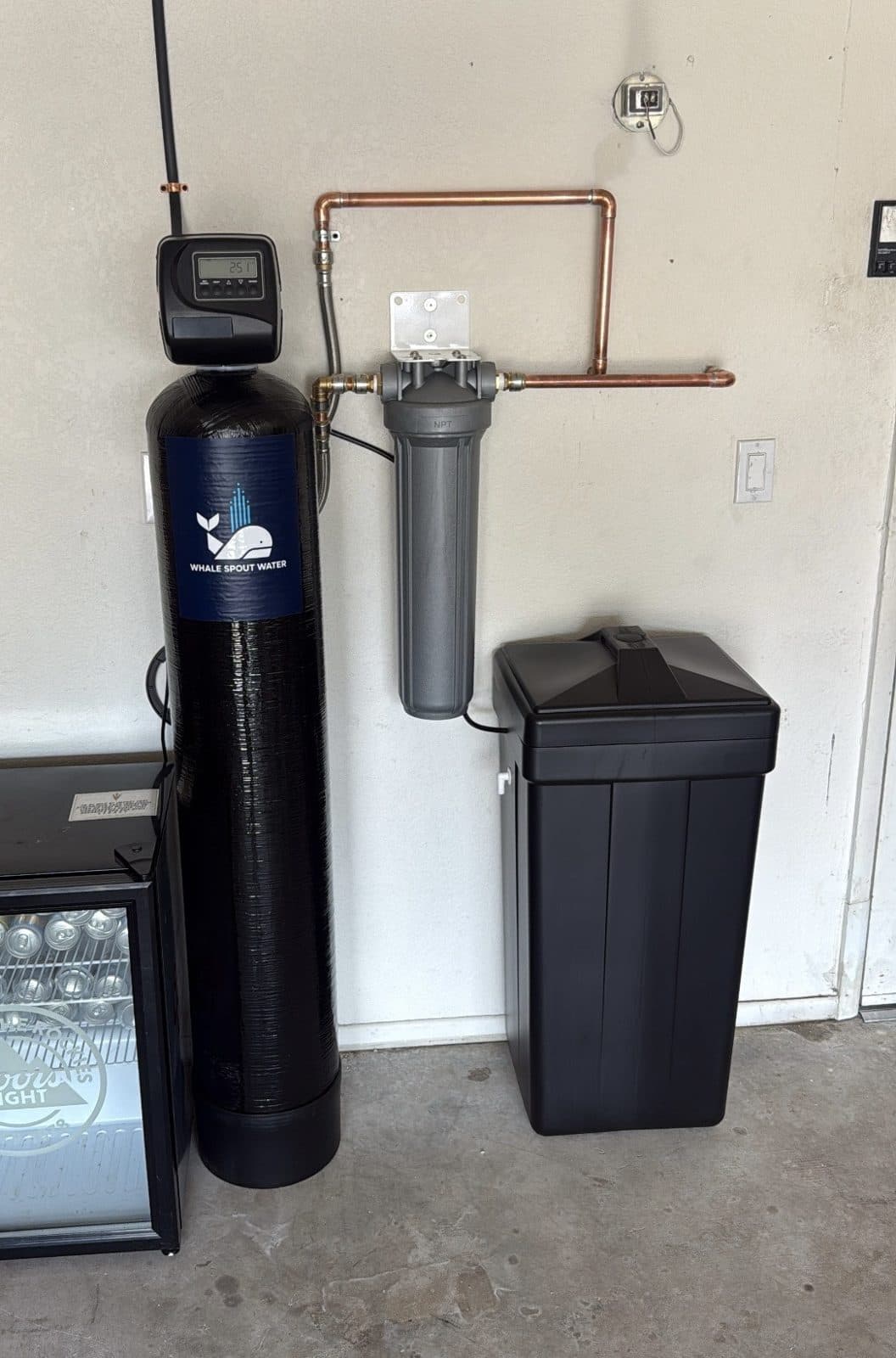
A whole-home ion exchange softener removes calcium and magnesium from your water before it reaches any fixture, appliance, or pipe in your home. The result is genuinely soft water. Scale stops forming immediately throughout the entire system. Within weeks, existing deposits begin to break down as soft water flows past them. This is the most comprehensive solution for Phoenix-area homeowners dealing with serious scale problems, skin and hair issues, or appliances showing early signs of damage.
At Whale Spout Water, whole-home salt softeners are installed for $3,399, fully installed, lifetime warranty, same NSF-certified components that major brands use at half their price.
Salt-Free Water Conditioner
A salt-free conditioner (also called a template-assisted crystallization or TAC system) doesn't remove calcium and magnesium. It changes their molecular structure so they can't bond to surfaces. Scale prevention without salt, electricity, or ongoing maintenance. Water minerals remain in the water, which some homeowners prefer for drinking. At $2,999 installed, it's a lower-maintenance alternative that still prevents the appliance damage and fixture buildup described above.
What About Descaling Sprays and DIY Vinegar Treatments?
Vinegar is mildly acidic and will dissolve calcium carbonate. That's why soaking a crusty shower head in white vinegar for an hour removes the external buildup. It works for cosmetic surface deposits. It doesn't address the scale inside your water heater, inside your pipes, or inside your dishwasher's heating element. And it does nothing to prevent new scale from forming the moment your water starts flowing again. For Phoenix homeowners with very hard water, descaling sprays are a monthly chore that treats symptoms while the underlying damage continues. Treatment is the only thing that stops the cycle.
The Bottom Line for Phoenix, Scottsdale, Chandler, and the Rest of the Valley
The white crusty stuff on your shower head is calcium carbonate, the same mineral compound as limestone, deposited by some of the hardest municipal water in the United States. In Phoenix and across the valley, it builds up fast, it shows up everywhere water touches any surface, and it causes real financial damage to your appliances and plumbing over years of accumulation.
The good news: it's completely preventable. A whole-home water softener or salt-free conditioner stops scale formation throughout your home from day one, protecting every appliance, fixture, pipe, and surface that your water touches.
If you want to understand your home's specific water hardness and which treatment option makes sense for your situation, book a free 15-minute virtual consult. We'll give you honest answers, no sales pressure, no obligation.